

At Pluginizer, we’re excited to showcase some of the most impressive WooCommerce stores across various industries.
In this post, we’ll explore real-world WooCommerce examples that have achieved remarkable success in fashion, food and beverage, and digital products.
We’ll analyze their key features, design elements, and strategies that have contributed to their growth and customer satisfaction.
How Top Fashion Stores Succeed with WooCommerce
WooCommerce has become a powerhouse for fashion retailers, enabling them to create stunning online stores that rival high-end boutiques. Several standout examples showcase the platform’s versatility and effectiveness in the fashion industry.
Design That Dazzles
Ghurka, a luxury leather goods brand, exemplifies how high-end fashion can shine online. Their clean, minimalist design puts the focus squarely on their products, with large, high-quality images that allow customers to appreciate the craftsmanship of each item. Ghurka’s use of white space and elegant typography creates an atmosphere of sophistication that aligns perfectly with their brand identity.
Black Halo, a women’s clothing brand, features a dynamic homepage with a full-width slider showcasing their latest collections. The site’s responsive design ensures a seamless shopping experience across all devices, a critical factor considering that mobile commerce now accounts for over 70% of all ecommerce sales (according to Statista).

Features That Convert
Successful WooCommerce fashion stores leverage key features to enhance the shopping experience. MVMT Watches uses product quick views and zoom functionality to give customers a detailed look at their timepieces without leaving the product listing page. This feature increases conversion rates by up to 40% (as reported by Baymard Institute).
Subscription-based clothing service Stitch Fix utilizes WooCommerce’s flexibility to create a unique shopping model. Their site incorporates a style quiz that personalizes the shopping experience, leading to higher customer satisfaction and increased sales.
Engagement Strategies That Work
Top-performing fashion stores on WooCommerce implement effective marketing and engagement strategies. Wool and the Gang, a DIY fashion brand, excels in this area. They use email marketing integrated with their WooCommerce store to send personalized product recommendations based on previous purchases and browsing history.
Social proof is another powerful tool used by successful WooCommerce fashion stores. Displaying customer reviews can boost ecommerce conversion rates by up to 67%.
User-generated content has proven to be a game-changer for many fashion brands on WooCommerce. Modcloth, a vintage-inspired clothing retailer, encourages customers to share photos of themselves wearing their purchases. These images are then featured on product pages, providing potential buyers with real-life examples of how the clothes look and fit.
These fashion brands have created online stores that not only look great but also drive significant sales and customer loyalty. Their success demonstrates the power of WooCommerce in the fashion industry. Now, let’s explore how food and beverage stores are using WooCommerce to create unique and appetizing online experiences.
Tasty Tech: How Food Stores Spice Up WooCommerce
Appetizing Visuals
Food and beverage stores on WooCommerce create mouthwatering online experiences through powerful visual appeal. High-performing WooCommerce stores like Davis Instruments, Shop Catalog, Sodashi, Simply Chocolate, and Printing New York showcase this approach with high-resolution images of their products. Their homepages often feature rotating galleries of their offerings, which entices visitors to explore further.

Smart Categorization
Effective product organization proves crucial for food and beverage stores. Well-structured category systems help customers find exactly what they want. Clear, descriptive category names and subcategories can guide shoppers effortlessly through extensive product ranges.
Some stores organize their products not just by flavor, but also by occasion and dietary requirements. This customer-centric categorization helps shoppers quickly find products that match their specific needs.
Seamless Order Fulfillment
In the food industry, timely delivery is paramount. WooCommerce restaurant plugins allow businesses to set up online food orders, delivery, and reservations efficiently. These tools also enable restaurants to display online food menus to hungry customers, enhancing the user experience.
Some services use WooCommerce to offer flexible subscription options. Customers can easily customize their orders, change delivery frequencies, and pause subscriptions as needed. This level of control enhances customer satisfaction and reduces churn rates.
Engaging Product Descriptions
Detailed descriptions for each product, including origin, flavor profile, and suggested uses, can greatly enhance the shopping experience. This rich content not only informs customers but also inspires them to try new products.
Some brands take storytelling to the next level in their product descriptions. They share the cultural significance of each product and provide quick recipes, turning their product pages into engaging content hubs that keep customers coming back for more.
These innovative approaches demonstrate the power of WooCommerce for food and beverage businesses. Visual appeal, smart categorization, efficient fulfillment, and engaging product information form the recipe for ecommerce success in this industry. As we move from the tangible world of food to the digital realm, let’s explore how WooCommerce empowers stores selling digital products to thrive in the online marketplace.
How Digital Product Stores Thrive on WooCommerce
Protecting Intellectual Property
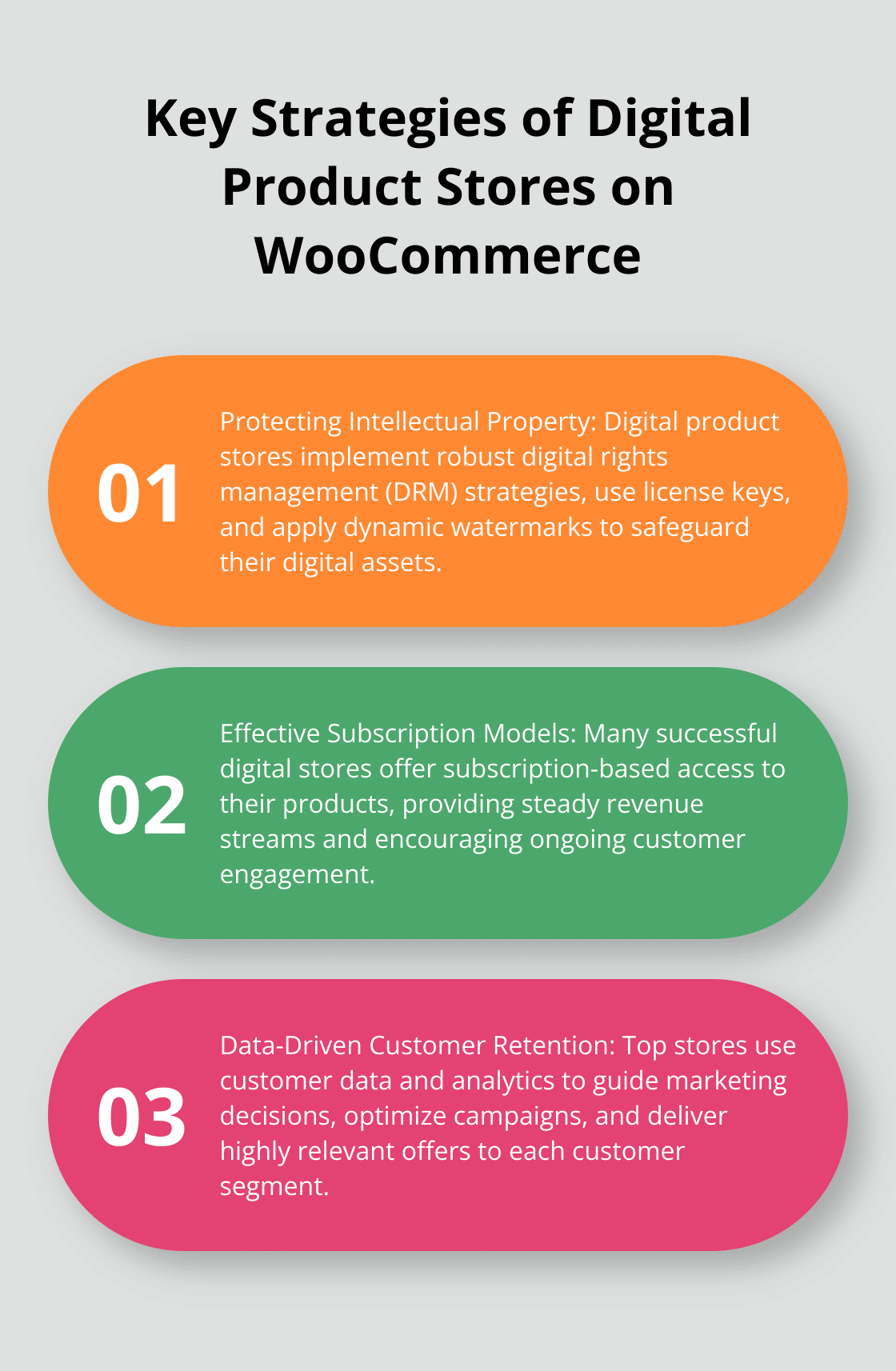
Digital product stores on WooCommerce prioritize the protection of their intellectual property. Envato Elements implements robust digital rights management (DRM) strategies to safeguard their vast library of digital assets. They use license keys and download limits to control access, which ensures that only paying customers can use their products.
Stock photo site 123RF applies dynamic watermarks to preview images. This approach deters unauthorized use while still allowing customers to evaluate the product before purchase. The balance between protection and accessibility has helped them build trust with both contributors and buyers.
Effective Subscription Models
Subscription-based models prove highly effective for digital product stores. Skillshare, a popular online learning platform, uses WooCommerce to offer unlimited access to thousands of classes for a monthly fee. This model provides a steady revenue stream and encourages ongoing engagement with their content.
MemberPress, a membership plugin for WordPress, has built its entire business model around subscriptions. They offer tiered pricing plans that cater to different user needs (from small bloggers to large organizations). This flexibility allows them to capture a wide market share and maintain long-term customer relationships.
Data-Driven Customer Retention
Successful digital product stores on WooCommerce understand the power of data-driven marketing. This strategic approach uses customer data and analytics to guide marketing decisions and optimize campaigns. Elegant Themes, a premium WordPress theme provider, uses customer purchase history and browsing behavior to send targeted email campaigns.
AppSumo, a digital marketplace for software deals, employs a sophisticated tagging system to segment their audience. This allows them to deliver highly relevant offers to each customer segment, resulting in strong repeat purchase behavior.
Simplified Asset Management
Digital product stores try to simplify asset management for their users. Some platforms (like Pluginizer) offer access to thousands of premium plugins and themes for a one-time fee. This approach ensures users always have the latest updates and support, while eliminating the need to manage multiple licenses and subscriptions.
Continuous Updates and Support
Successful digital product stores on WooCommerce prioritize continuous updates and robust support. This commitment to ongoing improvement and customer service helps build trust and loyalty among users. Regular updates ensure that digital products remain compatible with the latest technologies and security standards, while responsive support addresses user concerns promptly.
Final Thoughts
The success stories of WooCommerce stores across various sectors reveal common threads that contribute to their achievements. These WooCommerce examples demonstrate the platform’s versatility and power in creating thriving online businesses. From intuitive navigation to mobile responsiveness, top stores prioritize a smooth shopping process for their customers.
High-quality visuals and effective product organization emerge as critical elements across all industries. Stores that invest in professional photography and logical category structures often see higher conversion rates. Personalization and customer engagement strategies also stand out as common success factors, creating memorable experiences beyond simply selling products.
WooCommerce store owners can elevate their online presence by implementing these proven strategies. Pluginizer offers a solution that provides access to over 15,000 premium plugins and themes for a one-time subscription fee. This approach can save costs on individual purchases while ensuring you have the tools needed to enhance your store’s functionality and performance.