

At Pluginizer, countless WordPress plugin developers struggle without a solid business plan. Many creators dive into development, driven by passion and technical skills, but overlook crucial business aspects.
WordPress plugins without a business plan often face challenges related to sustainability, growth, and long-term success. This oversight can lead to inconsistent updates, poor user support, and difficulty in monetization.
In this post, we’ll explore the risks of developing plugins without a plan and share strategies for success in the competitive WordPress ecosystem.
Why a Business Plan is Essential for Plugin Success
Market Research: Your First Step to Success
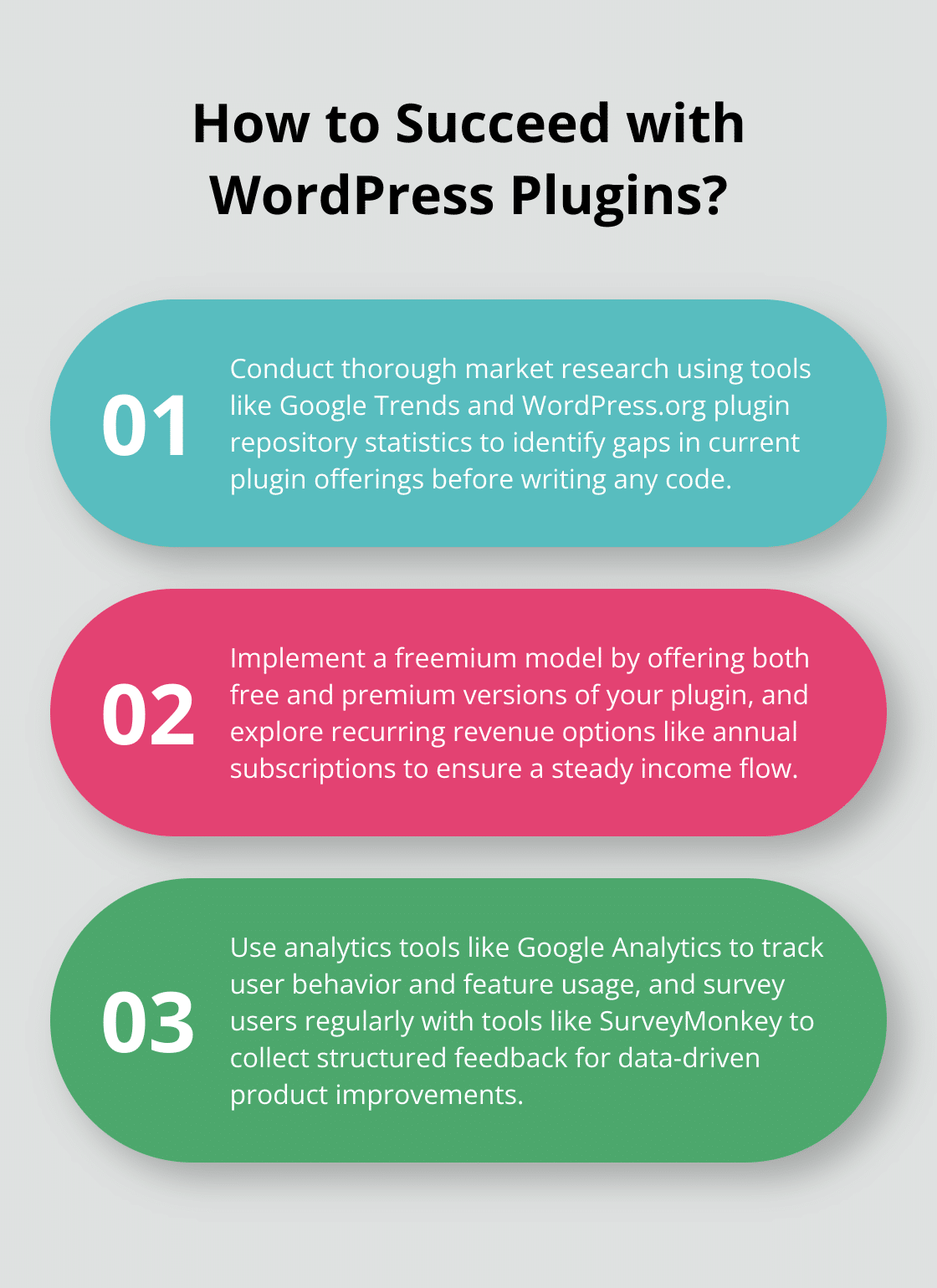
Before you write a single line of code, you must understand your target market. Conduct thorough research to identify gaps in the current plugin offerings. Use tools like Google Trends, WordPress.org plugin repository statistics, and competitor analysis to gauge demand. A recent study found that WordPress users cited site performance improvements, including site loading speed and SEO impact, as the main reasons for choosing plugins.
Setting SMART Goals for Your Plugin Business
Establish Specific, Measurable, Achievable, Relevant, and Time-bound (SMART) goals for your plugin. This approach helps you focus and track progress. For instance, acquire 1,000 active installs within the first six months of launch or generate $5,000 in monthly recurring revenue by the end of the first year.
Financial Planning: The Key to Sustainability
Develop a detailed financial plan that outlines your expected costs and revenue streams. Consider development expenses, marketing budgets, and ongoing maintenance costs.

Pricing strategy plays a vital role. Analyze your competitors’ pricing models and consider offering tiered plans to cater to different user segments. Underpricing can lead to unsustainability while overpricing may deter potential customers.
Resource Allocation: Maximizing Efficiency
Efficiently allocate your resources (time, money, and skills) to ensure plugin success. Prioritize tasks based on their impact on your business goals. If you’re a solo developer, consider outsourcing non-core activities like marketing or support to focus on product development.
A business plan acts as a roadmap, guiding your plugin development journey and increasing your chances of long-term success in the WordPress ecosystem. It helps you anticipate challenges, make informed decisions, and adapt to market changes effectively. Now, let’s explore the common pitfalls developers face when they neglect to create a solid business plan for their WordPress plugins.
The Hidden Costs of Skipping a Business Plan
Unsustainable Revenue Models
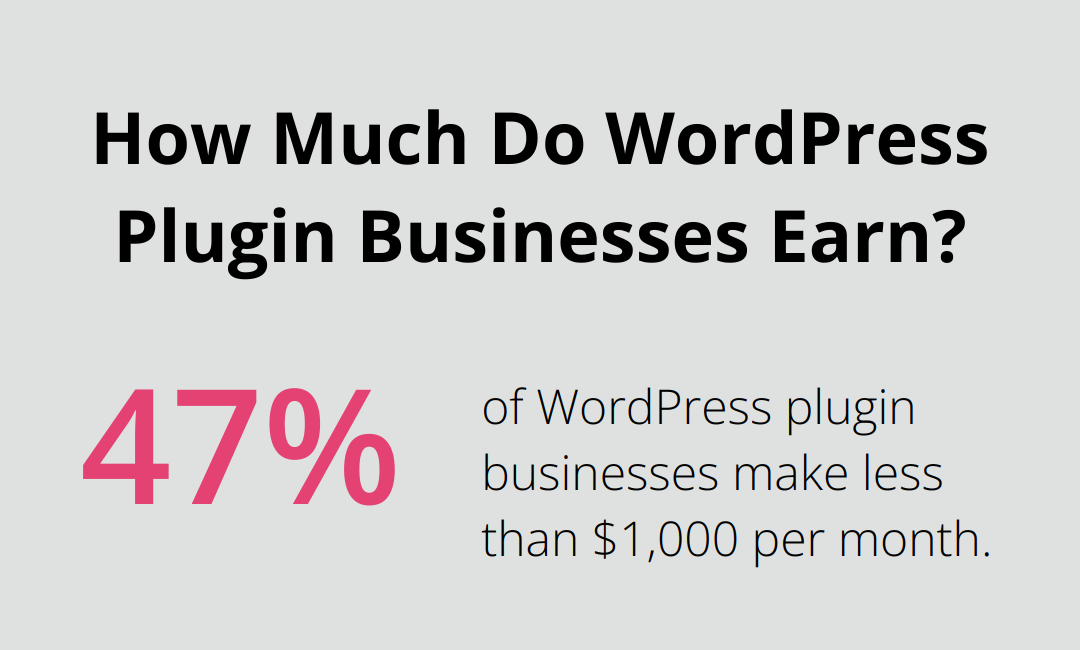
Many plugin developers struggle to create a sustainable income stream. Without a clear monetization strategy, you might work tirelessly on a plugin that fails to generate sufficient revenue. A study by Freemius found that 47% of WordPress plugin businesses make less than $1,000 per month. This underscores the importance of having a well-thought-out pricing strategy and diversified income sources.
To avoid this pitfall, offer free and premium versions of your plugin. This freemium model allows users to try your product before purchasing. Additionally, explore recurring revenue options like annual subscriptions or add-on services to ensure a steady income flow.
Inconsistent Updates and Poor Support
Developers often struggle to maintain regular update schedules and provide adequate user support without proper planning. This inconsistency can lead to dissatisfied users and negative reviews, ultimately impacting your plugin’s reputation and adoption rate.
RegulaWhening a plugin. Regular updates are critical. This allocates time and resources for ongoing maintenance and support in your business plan. Use a ticketing system to manage user inquiries efficiently and set realistic expectations for response times.
Scaling Difficulties
As your plugin gains popularity, scaling your operations can become a significant challenge without a solid business plan. You might find yourself overwhelmed with support requests, feature demands, and the need for more robust infrastructure.
To prepare for growth, outline a roadmap for your plugin’s development. Include plans for hiring additional team members, upgrading your hosting infrastructure, and implementing automated processes where possible. Use tools like New Relic or Datadog (industry-standard performance monitoring solutions) to monitor your plugin’s performance as it scales.
Missed Opportunities for Partnerships
Without a business plan, you might overlook valuable partnership opportunities. Collaborations with other plugin developers or WordPress-related businesses can lead to cross-promotions, integrations, and expanded user bases.
Identify potential partners whose products complement yours and propose specific collaboration proposals. For example, if you’ve developed an e-commerce plugin, partnering with a marketing automation tool could create a powerful synergy for your users.
Lack of Long-term Vision
Developing a plugin without a business plan often results in a lack of long-term vision. Instead of proactively steering your product toward sustainable growth, you might react to short-term challenges.
Create a five-year vision for your plugin business. Include milestones for user acquisition, revenue targets, and product evolution. This long-term perspective will help you make informed decisions and prioritize initiatives aligning with your goals.
The consequences of skipping a business plan can be severe, potentially leading to the failure of your plugin venture. In the next section, we’ll explore strategies for success in the competitive WordPress plugin ecosystem, helping you avoid these pitfalls and build a thriving business.
How to Thrive in the WordPress Plugin Market
Identify and Solve Real User Problems
Success in the WordPress plugin ecosystem starts with addressing genuine needs in the community. Analyze popular WordPress forums, social media groups, and competitor reviews to spot recurring issues or feature requests. A recent survey revealed that WordPress could benefit from streamlining its core code and encouraging best practices for speed optimization among theme and plugin developers.
Create a Minimum Viable Product (MVP) and release it to a small group of beta testers. Collect their feedback and make quick iterations. This method validates your idea before you invest significant resources.
Implement Effective Marketing Strategies
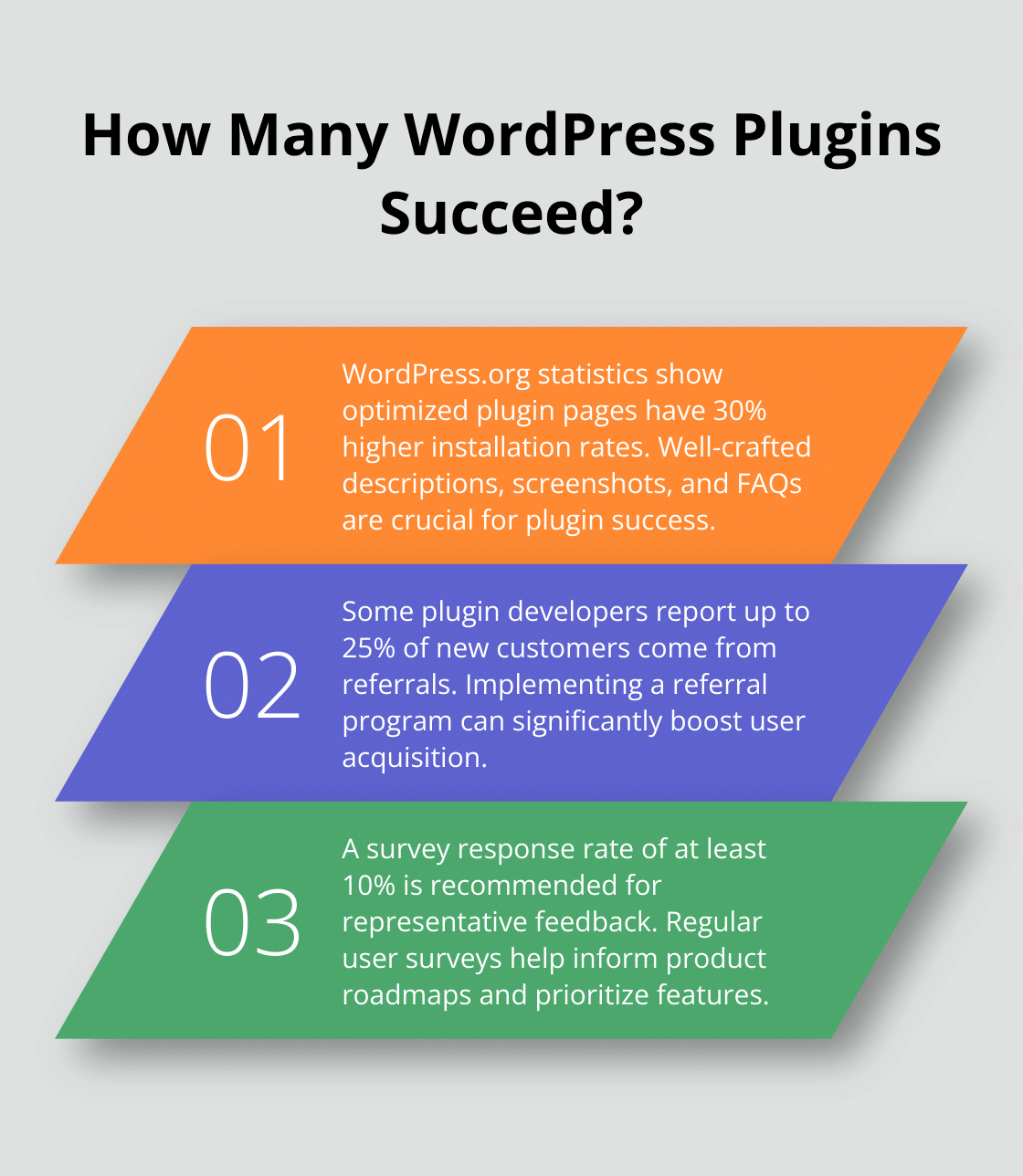
Even the best plugin needs proper marketing to succeed. Optimize your WordPress.org plugin page with compelling screenshots, a clear and concise description, and a detailed FAQ section. WordPress.org statistics show that plugins with well-optimized pages see up to 30% higher installation rates.
Use content marketing by creating tutorials, case studies, and blog posts that showcase your plugin’s value. Share these across relevant WordPress communities and social media platforms. Consider partnerships with WordPress influencers or bloggers for product reviews or guest posting opportunities.
Start a referral program to motivate your existing users to spread the word. Offer discounts or extended features for successful referrals. This strategy has proven effective for many plugin developers (some report up to 25% of new customers coming from referrals).
Pursue Data-Driven Improvement
Long-term success in the plugin market requires continuous improvement. Use analytics tools to track user behavior, feature usage, and performance metrics. Google Analytics can provide valuable insights into user demographics and acquisition channels.
Survey your users regularly to understand their needs and pain points. Tools like SurveyMonkey or Google Forms can help you collect structured feedback. To ensure a representative sample, try to achieve a response rate of at least 10%.
Use this data to inform your product roadmap. Prioritize features and improvements based on user demand and potential impact. For example, if 80% of your users request a specific integration, it should top your development list.
Monitor your plugin’s performance on various WordPress configurations. Tools like WP Engine’s Local allow you to test your plugin across different PHP versions and WordPress setups, ensuring compatibility and optimal performance.
Stay Informed and Adapt
The plugin market constantly evolves. Stay updated on WordPress core updates, emerging technologies, and changing user needs to maintain your competitive edge. Attend WordPress conferences, participate in online communities, and follow industry blogs to stay on top of the ecosystem.
Consider exploring comprehensive solutions like Pluginizer, which offers access to a wide range of premium WordPress plugins and themes. These solutions can provide inspiration and insights into current market trends and user preferences.
Final Thoughts
WordPress plugins without a business plan face significant challenges—developers who skip planning risk unsustainable revenue, inconsistent updates, and scaling difficulties. A well-structured business approach provides a clear roadmap, helps understand the target market, and sets realistic goals.
We at Pluginizer encourage developers to plan for long-term success. This investment results in a more resilient business, happier users, and a stronger market position. Success in the WordPress plugin ecosystem combines technical expertise with sound business practices.
For those seeking to streamline their WordPress development process, Pluginizer offers access to over 15,000 premium assets through a single subscription. This comprehensive solution helps developers enhance their WordPress projects without managing multiple licenses. It’s an invaluable resource for building successful plugin businesses in the WordPress ecosystem.